

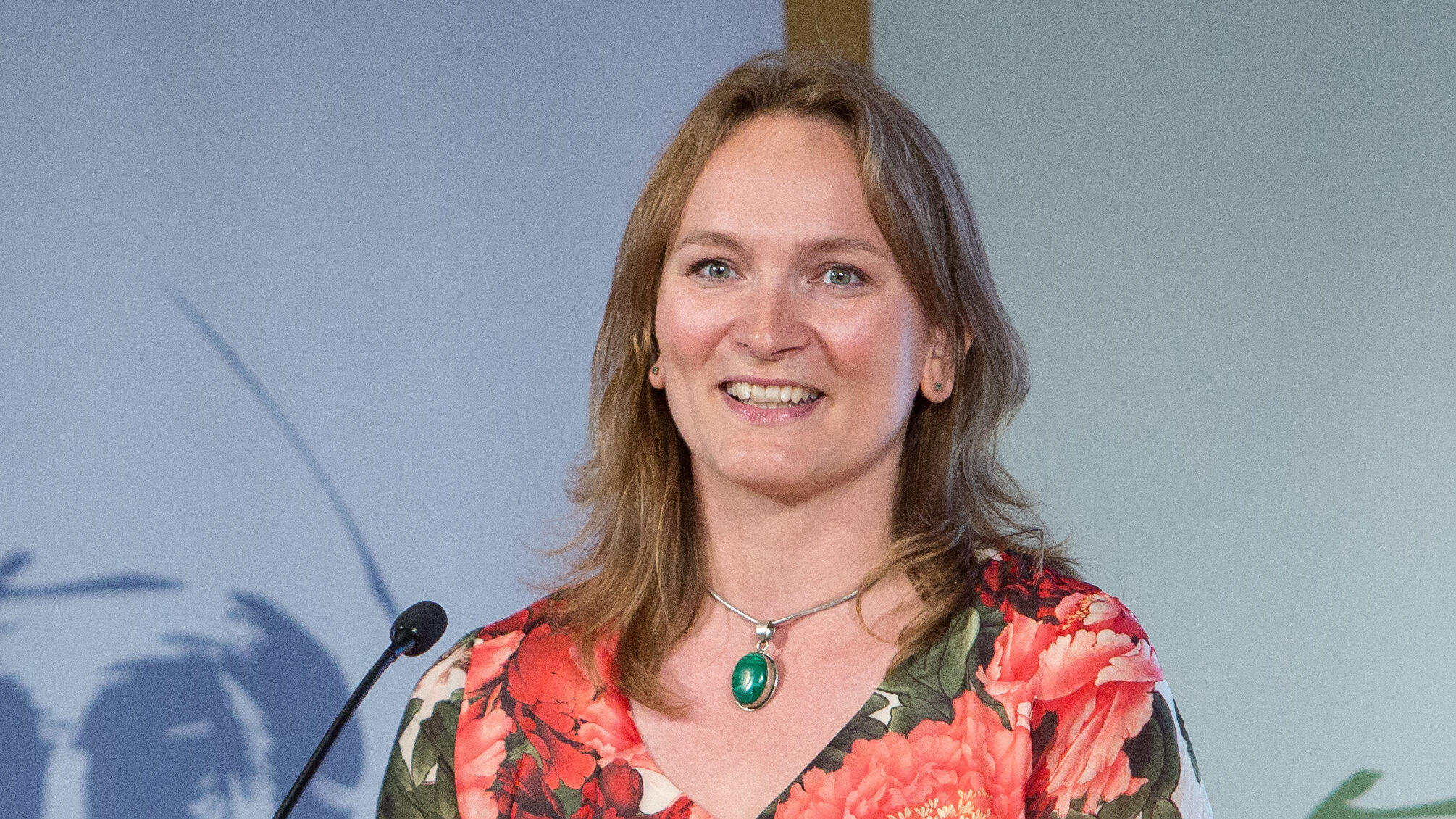
Nils Klim-prisvinner Francesca Refsum Jensenius sin takketale er her gjengitt i sin helhet.
Your Royal Highness, Honorable Minister, Holberg and Nils Klim Committees, colleagues, family and friends, ladies and gentlemen.
It is a great honor for me to be here today to receive the 2018 Nils Klim Prize. There are many talented young scholars in the Nordic countries, and I feel incredibly happy and very humbled that my work is being recognized in this way.
My family and I often joke when we see sports events, with exhausted runners or skiers being asked how they feel after their race, that it would be nice if academics too had gotten this kind of attention: “How do you feel getting this book contract?” Because academic life is to some extent like top-level sports: hard training, lots of travel, frequent disappointments, and exciting, but pretty short, moments of glory. Recognizing such efforts is important, and that is exactly what this prize does. The fact that the prize focuses on the work of young scholars in particular is both valuable and inspiring.
There are many people I would like to thank. Academic work is in some ways a lonely endeavor, but it is also very reliant on good teamwork. Throughout my academic career, I have benefited from having great mentors, collaborators, friends, and an incredibly supportive family. Some of you are here today, and I want each one of you to know how much I appreciate the things you have done for me: commenting on my applications and drafts, having an inspiring conversation about work, choosing to hire me, or forcing me to take a break to eat ice cream in the sun.
Good research leadership is important. I particularly want to thank the leadership at NUPI, where I worked these past five years, for a supportive work environment. Many young scholars struggle to combine mobile international careers with having a functioning private life, but the trust and flexibility I have experienced at NUPI has made that possible for me. At NUPI I have also learnt a lot about how one can actively create an inclusive work environment, by taking all members of the community seriously, and intervening whenever someone is being marginalized or excluded. So thank you for that!
There are many to whom I owe thanks who are not here: great co-authors, colleagues I have done fieldwork with, research assistants who have exceeded all expectations, and people I have interviewed who have shared their time and knowledge. I am also indebted to several mentors who have always been available to give support and advice. I hope to be able to serve that role for many others in return in my new position at the University of Oslo, and elsewhere.
I want to end with two points about what I find particularly exciting about working within the social sciences today. Compared to just a few decades ago, we now have access to an enormous amount of survey data, election results, social media posts, and other information from across the world, and we have the technical tools to merge and analyze massive datasets. The result is that both the way in which we do research and the state-of-the-art of our knowledge are rapidly changing. This makes it crucial to find effective ways of sharing our data and codes, and of making research easily accessible and replicable. The Open Science initiatives that are currently being discussed are therefore of great importance.
While the ongoing data revolution is a wonderful development, it is also important not to get blinded by it. Many important insights in the social sciences still come from understanding the various perspectives of individuals, the particular rather than the general. For this reason, I am very excited about the increasing focus on multi-method and inter-disciplinary work, drawing insights from different types of data and different forms of analysis. For researchers, this involves having to invest in mastering a broad set of methodological techniques and staying up-to-date in fast-moving fields. The reward is often robust and insightful research. I am happy to be part of these developments, and I am convinced that we will see a lot of high-quality social science research being produced in the time ahead.
Thank you so much for this recognition and for your attention!
– Francesca Refsum Jensenius
Sist endret:
Publisert:
Fakta
The Nils Klim Prize for 2018 was awarded to the Norwegian political scientist Francesca R. Jensenius (b. 1983).
Jensenius specializes in comparative politics and comparative political economy, with a regional focus on South Asia and Latin America. Her main research interest is to understand how institutional design and electoral dynamics affect different types of inequality.
Relatert innhold

Nils Klim-seminaret: “The Politics of Inclusion: Electoral Quotas in India”
Møt årets prisvinner, Francesca Refsum Jensenius i samtale med internasjonalt anerkjente fagfeller om hvordan kvoteringsordninger i India bør utformes for…
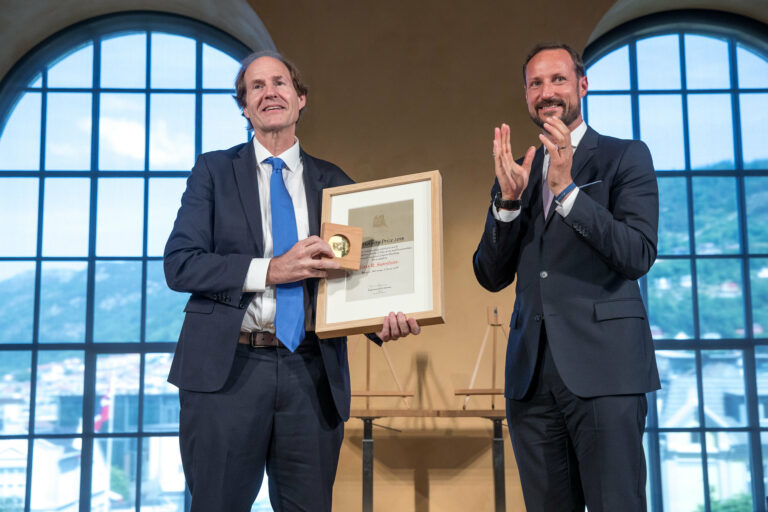
Prisutdeling for Holbergprisen og Nils Klim-prisen 2018
Den offisielle prisutdelingen for Holbergprisen og Nils Klim-prisen holdes i Universitetsaulaen den 6. juni.

Francesca Refsum Jensenius
Nils Klim-prisen 2018 ble tildelt den norske statsviteren Francesca Refsum Jensenius.